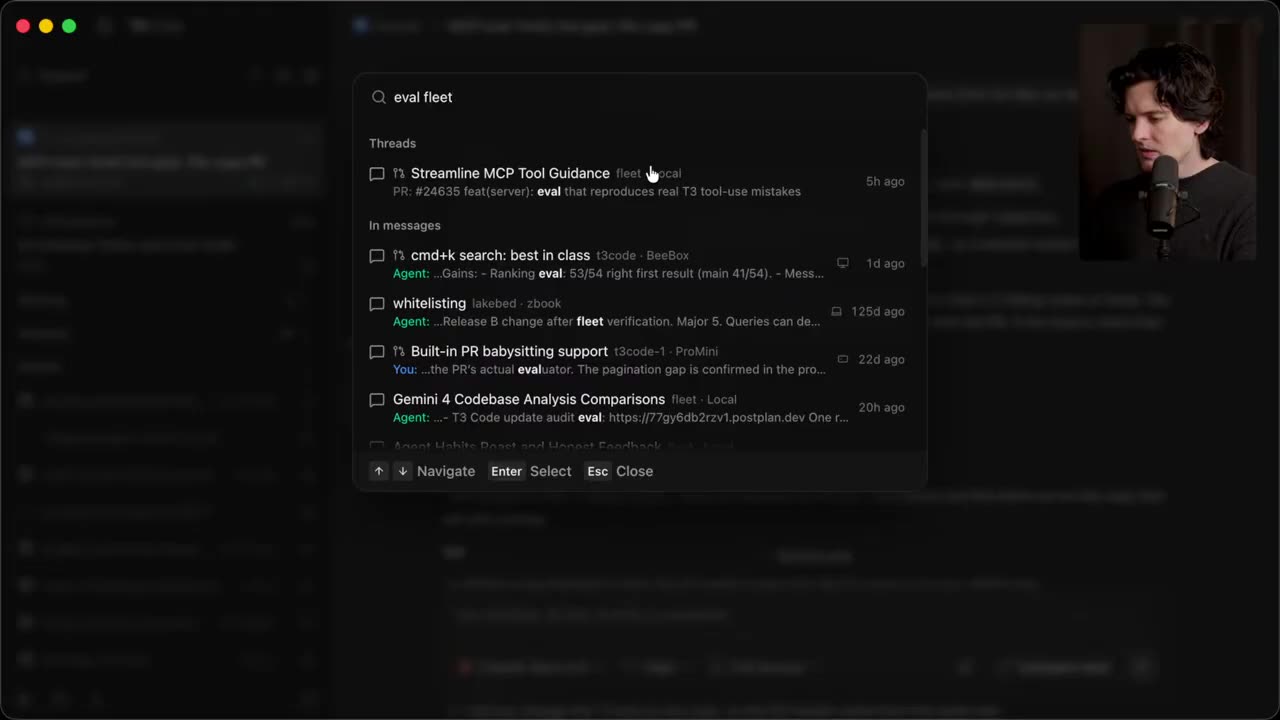
Gemini 4 Codebase Analysis@fleet
Agent: ...T3 Code update audit eval: https://77gy6db2rzv1.postplan.dev One r...
 Theo
We scan every video for X posts on screen, then check the transcript to see if they were read aloud. See everything Theo showed.
Every post with your handle on screen. A profile or post link works too.
Matches the text of one post, even if the handle was cropped out.
A few words you remember. Matches by words and by meaning.
@fleet
Theo showed your posts 7 times and read 2 aloud.
Agent: ...T3 Code update audit eval: https://77gy6db2rzv1.postplan.dev One r...
Shown on screen for about 5 seconds. Not read aloud.
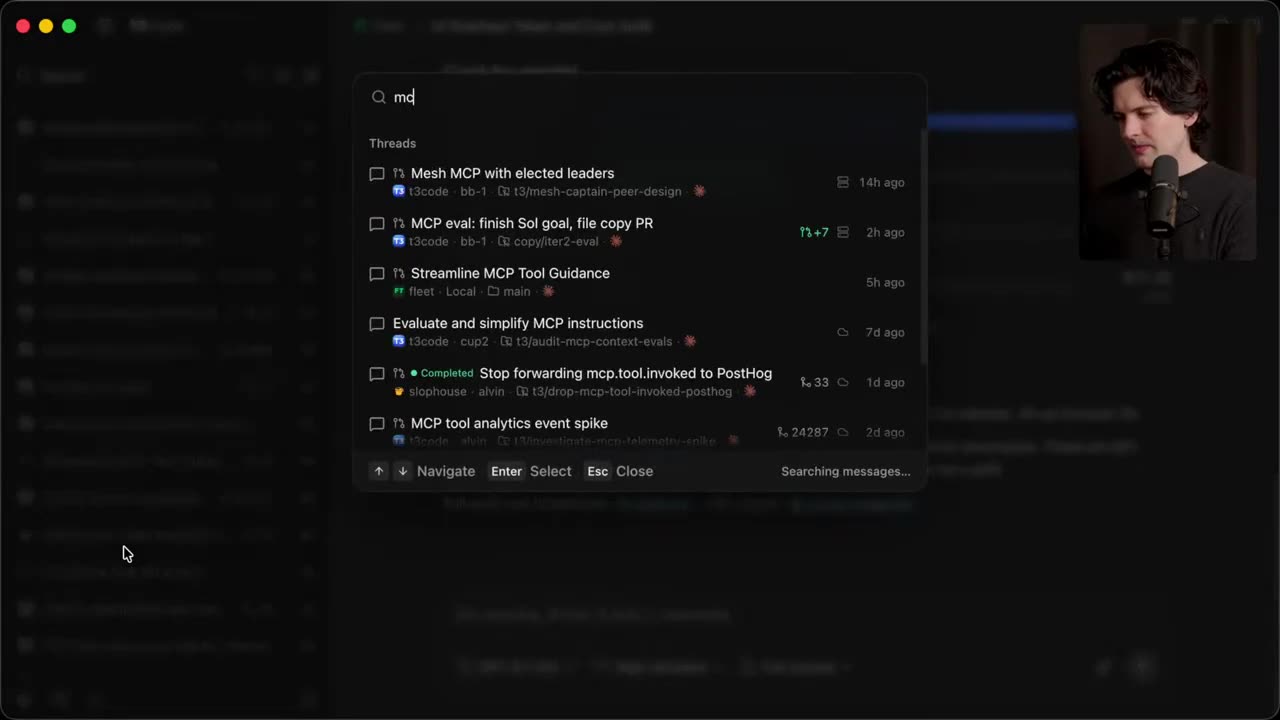
Streamline MCP Tool Guidance
Shown on screen for about 5 seconds. Not read aloud.
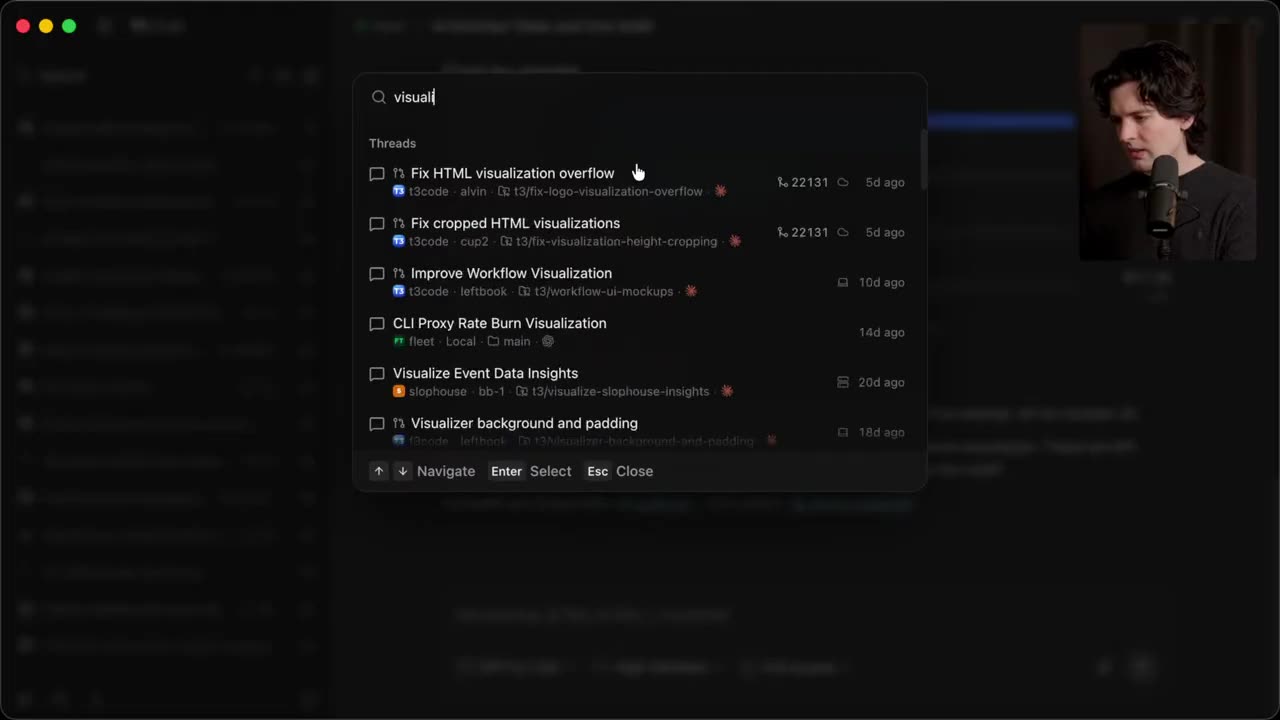
CLI Proxy Rate Burn Visualization
Shown on screen for about 5 seconds. Not read aloud.
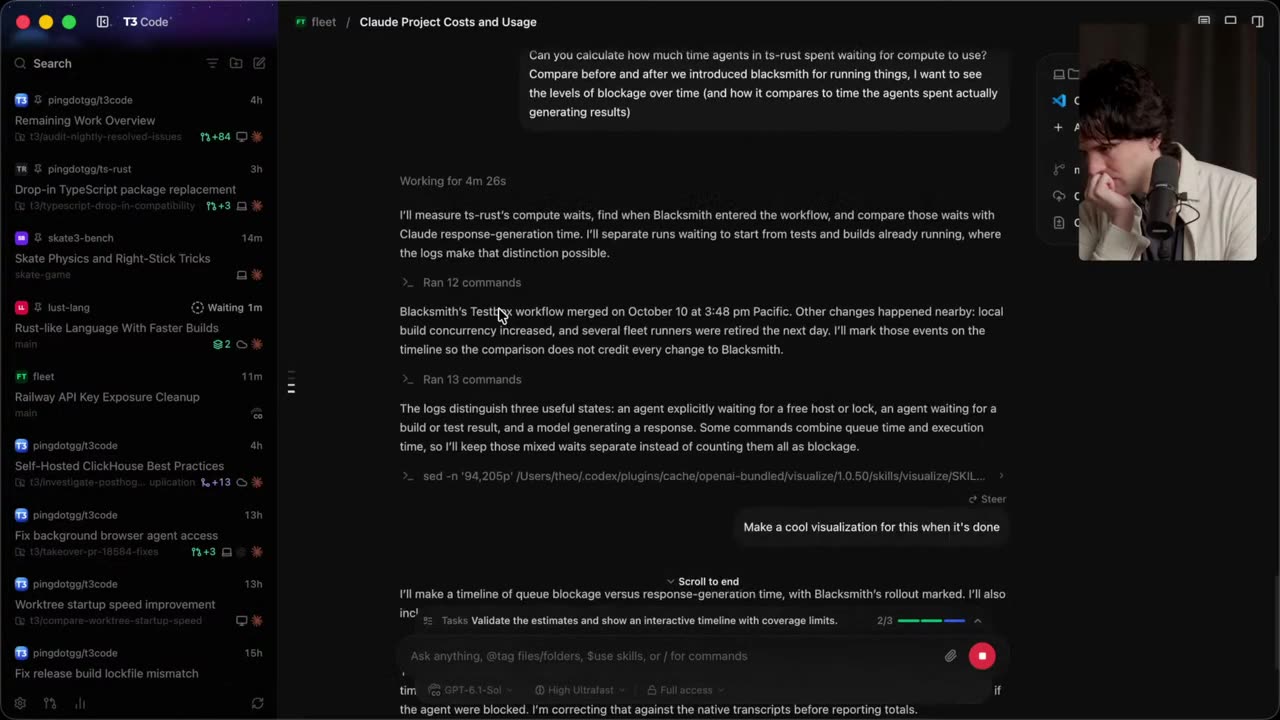
Can you calculate how much time agents in ts-rust spent waiting for compute to use? Compare before and after we introduced blacksmith for running things, I want to see the levels of blockage over time (and how to compare it to the agents spent actually generating results) Working for 4m 26s Waiting 1m I'll measure ts-rust's compute waits, find when Blacksmith entered the workflow, and compare those waits with Claude response-generation time. I'll separate runs waiting to start from tests and builds already running, where the logs make that distinction possible. > Ran 12 commands Blacksmith's Testify workflow merged on October 10 at 3:48 pm Pacific. Other changes happened nearby: local build concurrency increased, and several fleet runners were retired the next day. I'll mark those events on the timeline so the comparison does not credit every change to Blacksmith. > Ran 13 commands The logs distinguish three useful states: an agent explicitly waiting for a free host or lock, an agent waiting for a build or test result, and a model generating a response. Some commands combine queue time and execution time, so I'll keep those mixed waits separate instead of counting them all as blockage. > sed -n '94,205p' /Users/theo/code/plugs/cache/openai-bundled/visualize/1.0.50/skills/visualize/SKIL... > Make a cool visualization for this when it's done I'll make a timeline of queue blockage versus response-generation time, with Blacksmith's rollout marked. I'll also inc! Tasks Validate the estimates and show an interactive timeline with coverage limits. 2/3 Ask anything, @taq files/folders, dude, skills, or for commands if the agent were blocked, I'm correcting that against the naive transcript methods before reporting totals.
Shown on screen for about 5 seconds. Not read aloud.
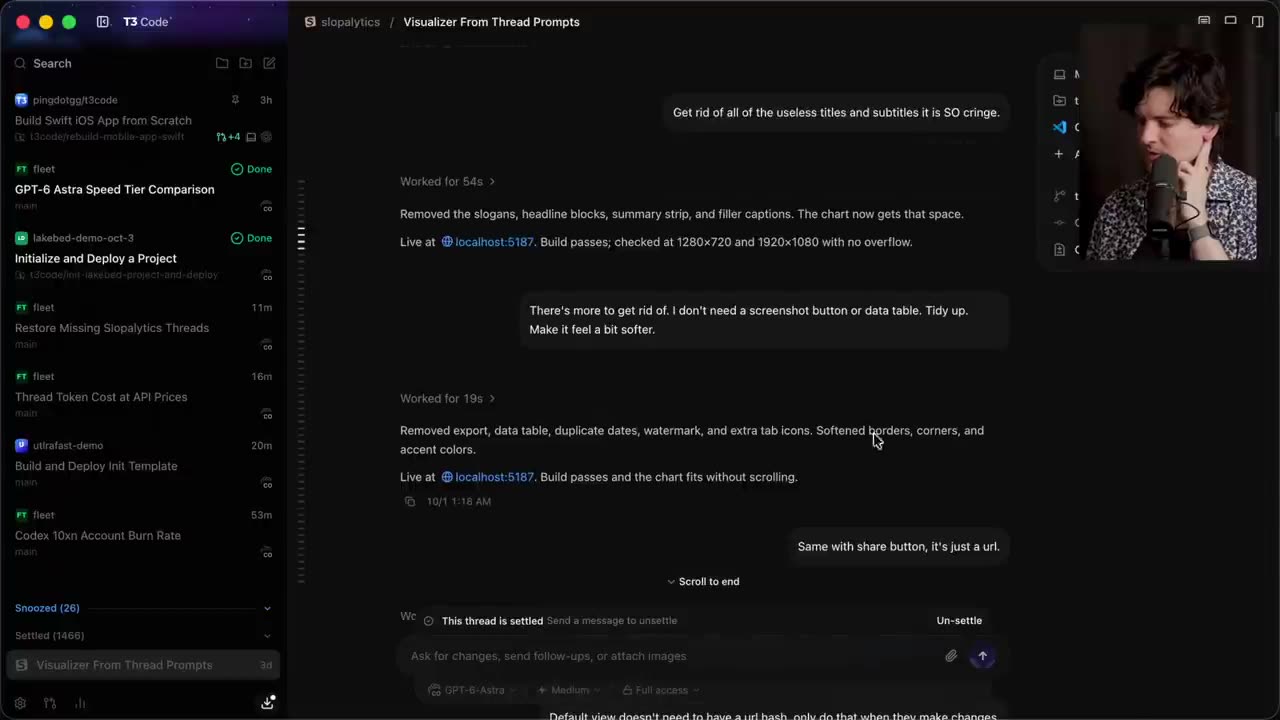
GPT-6 Astra Speed Tier Comparison Initialize and Deploy a Project Restore Missing Slopanalytics Threads Codex 10xn Account Burn Rate
Shown on screen for about 5 seconds. Not read aloud.
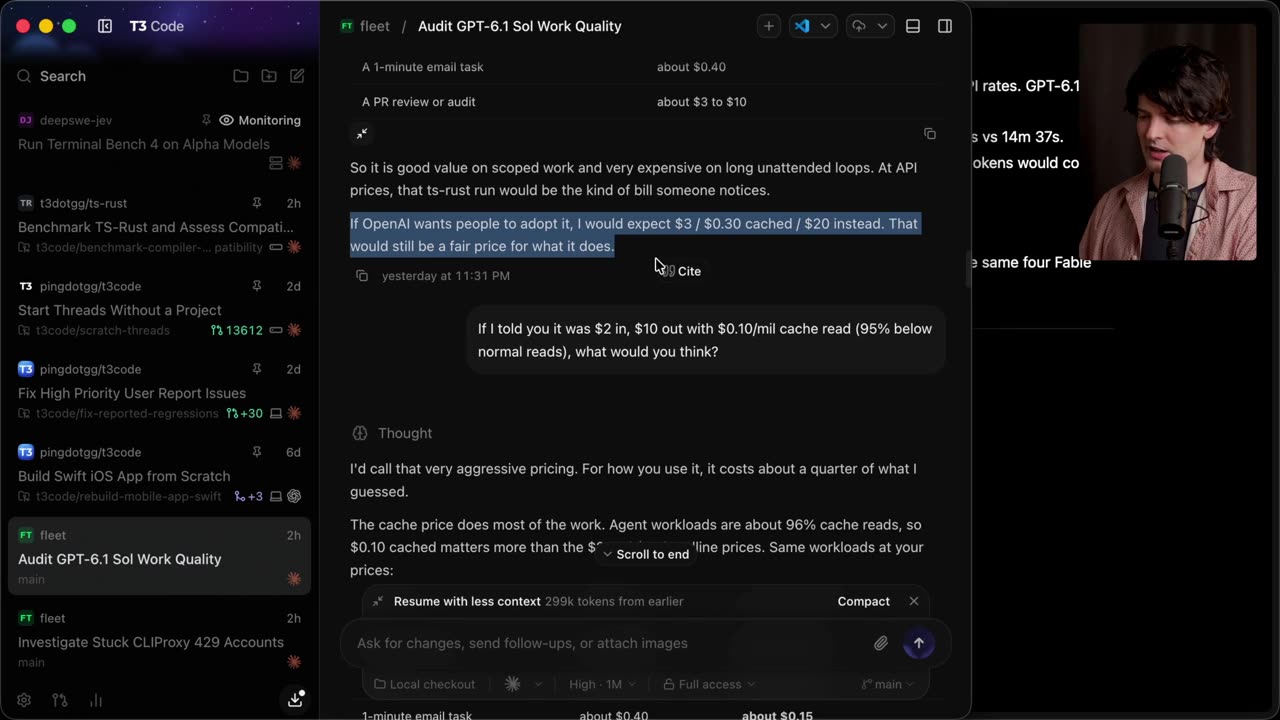
A 1-minute email task about $0.40 A PR review or audit about $3 to $10 So it is good value on scoped work and very expensive on long unattended loops. At API prices, that ts-rust won be the kind of bill someone notices. If OpenAI wants people to adopt it, I would expect $3 / $0.30 cached / $20 instead. That would still be a fair price for what it does.
If OpenAI wants people to adopt it, I would expect $3 per mil in, 30 cents for cashed, and $20 instead.
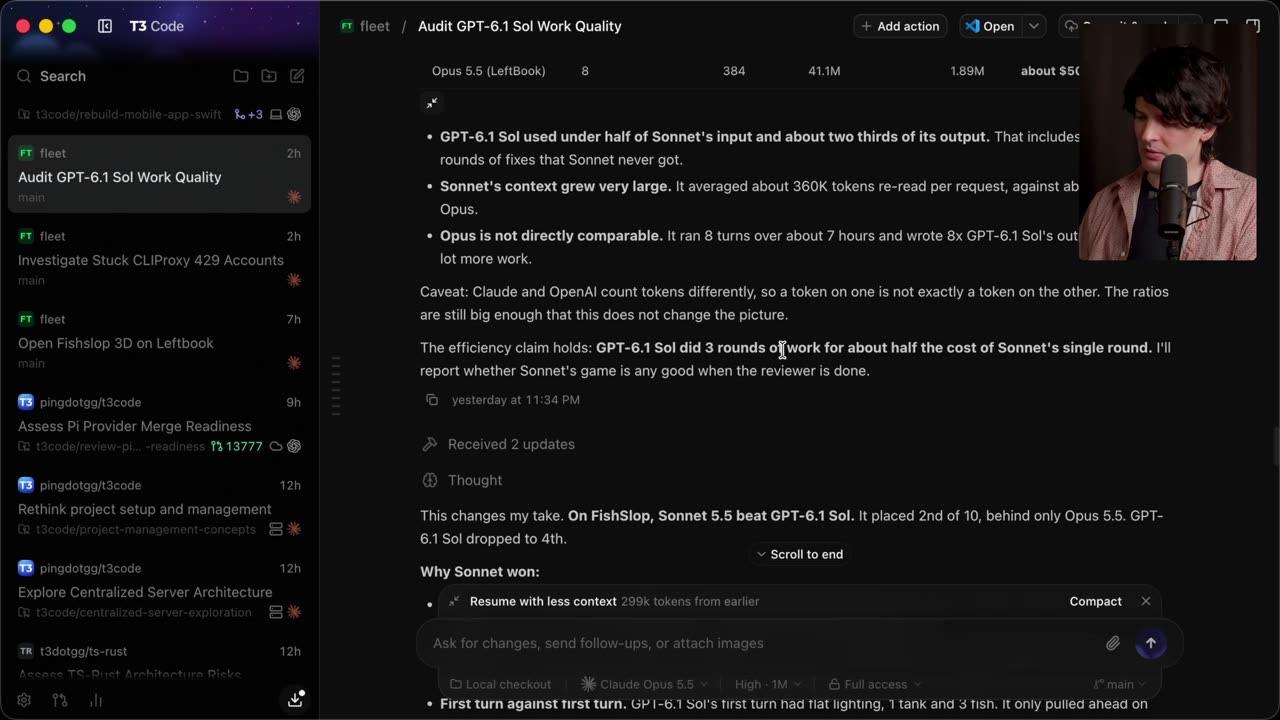
Audit GPT-6.1 Sol Work Quality GPT-6.1 Sol used under half of Sonnet's input and about two thirds of its output. That includes rounds of fixes that Sonnet never got. Sonnet's context grew very large. It averaged about 360K tokens re-read per request, against ab Opus. Opus is not directly comparable. It ran 8 hours over about 7 hours and wrote 8x GPT-6.1 Sol's out lot more work. Caveat: Claude and OpenAI count tokens differently, so a token on one is not exactly a token on the other. The ratios are still big enough that this does not change the picture. The efficiency claim holds: GPT-6.1 Sol did 3 rounds of work for about half the cost of Sonnet's single round. I'll report whether Sonnet's game is any good when the reviewer is done. Thought This changes my take. On FishSlop, Sonnet 5.5 beat GPT-6.1 Sol. It placed 2nd of 10, behind only Opus 5.5. GPT-6.1 Sol dropped to 4th.
GPT-4 1 sold did three rounds of work for about half the cost of Sonnet's single round.